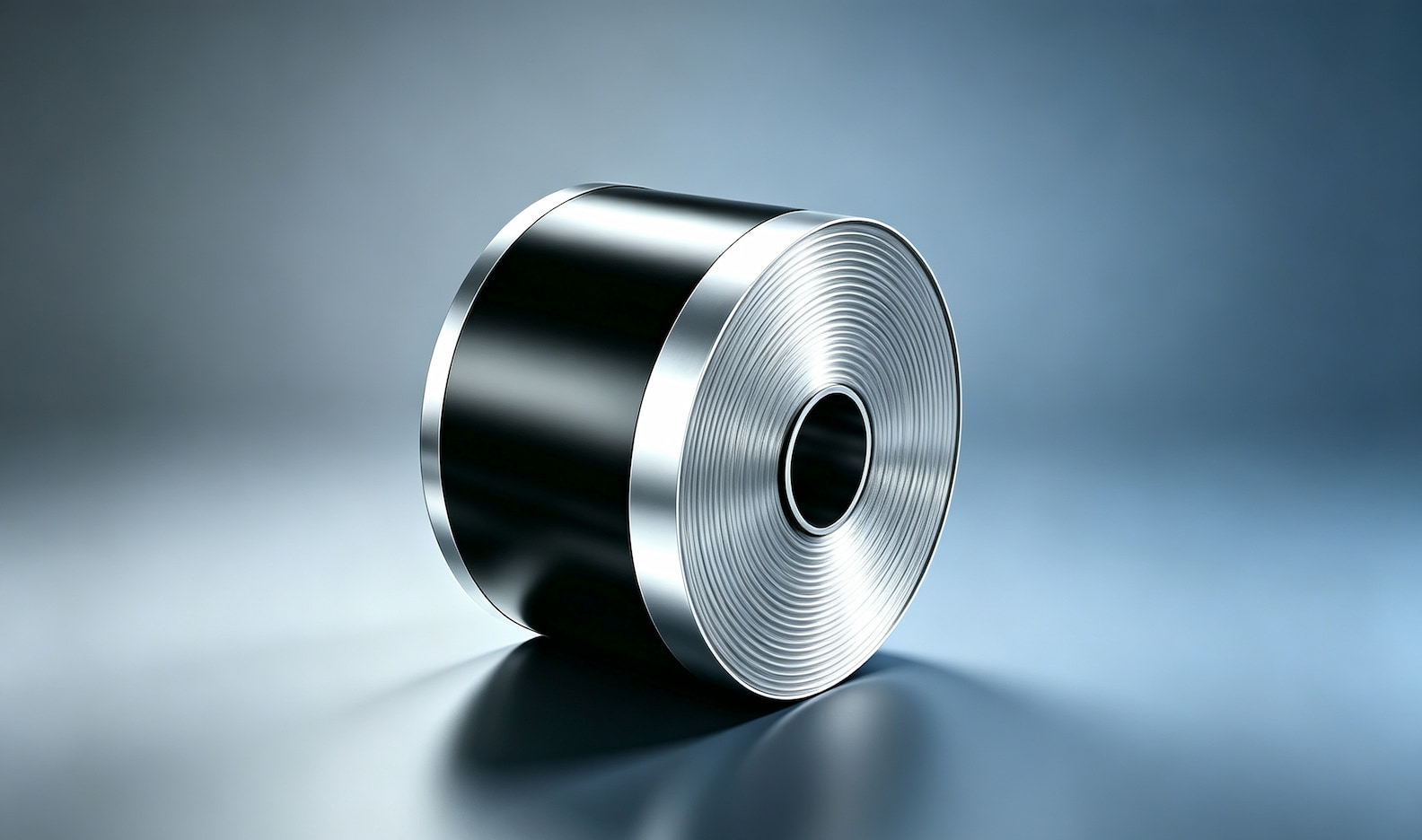
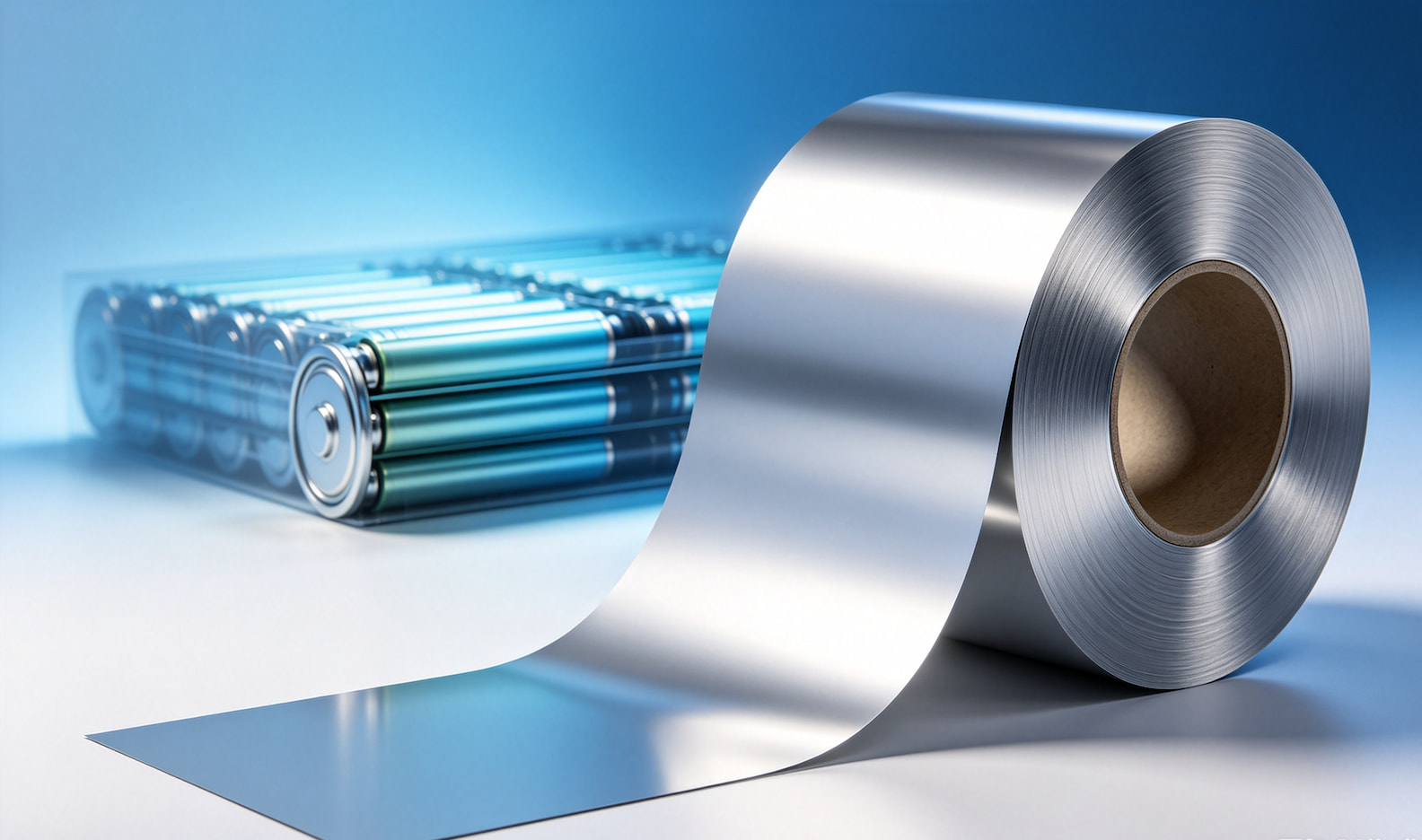
Carbon coated aluminum foil

  • Carbon-Coated Aluminum Foil Production Process Flowchart
    Carbon-Coated Aluminum Foil Production Process Flowchart
    Sep 07, 2026
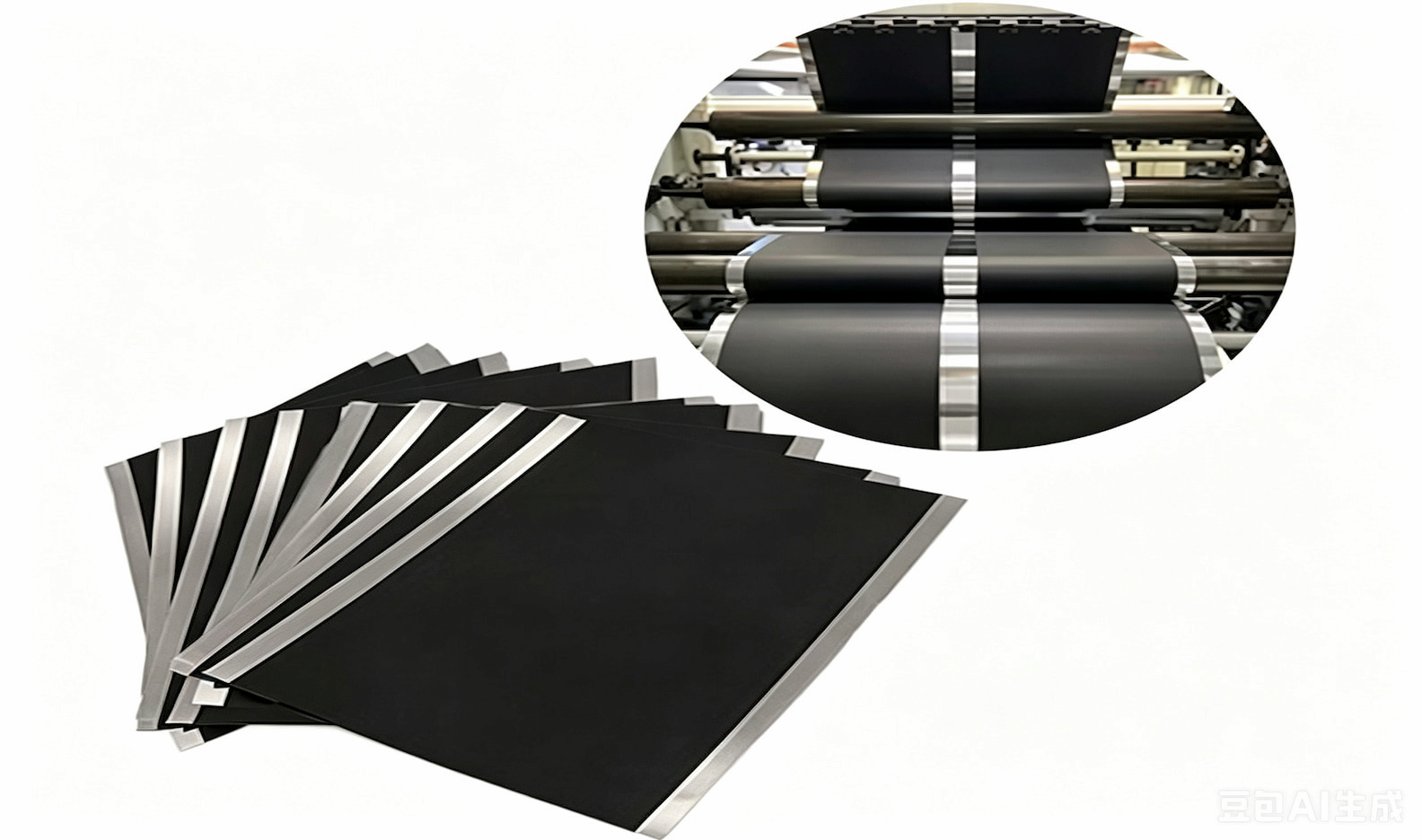
    Carbon-Coated Aluminum Foil is the key material for the LIFP battery cathode collector; the production process mainly comprises two parts: manufacturing bare aluminum foil and manufacturing carbon-coated foil. Among them, carbon coating manufacturing is the core stage, covering slurry preparation, coating, drying, quality inspection, and post-treatment. 1.Bare aluminum manufacture(base material) The basic material of carbon-coated aluminum foil is high-purity battery aluminum foil (purity over 99.9%, the ordinary thickness is 10-20um), primarily employing a cast-rolling–cold-rolling process. Melting and homogenization:                                                                                                                                                                                                                                  Aluminum ingots or billets are melted and cast into aluminum coils, followed by homogenization treatment to eliminate internal stresses and improve micro structural uniformity. Hot rolling vs. cold rolling:                                                                                                                                                                                                                                    Through multiple rolling processes—including hot rolling, cold rolling, intermediate annealing, and final rolling—the aluminum material is shaped to the specified dimensions, ensuring that the aluminum foil's thickness, surface roughness, and mechanical properties meet the required standards. Surface treatment:                                                                                                                                                                                                                                                      The surface of bare aluminum foil usually has an oxide layer and oil, which need to be removed by alkaline cleaning, acid cleaning, ultrasonic cleaning, or corona treatment, among other methods, to achieve surface cleanliness and activation, improving the Subsequent carbon coating adhesion.   2. Carbon coating manufacture (core steps) Carbon coating slurry preparation   Raw material ratio: Mix conductive carbon materials (e.g., carbon black, graphite, carbon nanotubes, graphene, etc.) with a film-forming agent (e.g., PVDF, acrylate-based binders, etc.), a solvent (e.g., deionized water, isopropanol, etc.), and additives (e.g., dispersants, wetting agents, etc.) according to a specified proportion.   Dispersion and refining: Mix and refine the material using a sand mill or high-speed disperser to control the slurry's viscosity, solid content, and particle size, ensuring the slurry is uniform, stable, and free from clumping.     Coating Process     Coating method:     The mainstream approach involves continuous roll-to-roll coating processes (such as gravure coating, blade coating, roller coating, or spray coating). Among these, gravure coating  is the most widely used due to its ability to precisely control coating thickness (within ±0.5 μm) and its suitability for continuous manufacturing.     Parameter control:     The coating speed, the black between the aluminum foils, and the coating's tensile strength need to be controlled to ensure the slurry can be coated continuously and evenly on the aluminum foil.   Drying and solidification     Segmented drying and gradient curing:     After coating, the aluminum foil is placed into a multi-stage temperature-controlled oven (e.g., hot-air drying oven, infrared drying oven, or tunnel drying oven) for a gradient heating process that facilitates rapid solvent evaporation and preliminary curing of the carbon layer, thereby preventing coating cracking or blistering.     High-temperature curing:     In certain processes, the coated foil must undergo high-temperature curing in a curing oven; this high-temperature heating ensures complete curing of the carbon layer, thereby enhancing the adhesion strength between the coating and the aluminum foil as well as the stability of the conductive network.    Quality inspection   Before and after slitting, the finished product needs to be fully inspected, including Coating thickness measurement (thickness gauge), conductivity/rectangular resistance testing (resistance tester), adhesion testing (delamination test), and surface defect inspection (visual or optical inspection); reject any defects such as incomplete coating, scratches, or material detachment. Post treatment    The aluminum foil, which has finished coating and solid process, goes through a cooling system and rectifies any deviation. Perform precise cutting using a cutting machine according to the battery manufacturer's specifications (e.g., narrow-width rolls). Finally, the product is wound onto a finished roll using a winding machine and then packaged with an anti-static/anti-moisture film.
    Read More
  • Why Is Battery Aluminum Foil the Most In-Demand Component for New Energy Vehicles?
    Why Is Battery Aluminum Foil the Most In-Demand Component for New Energy Vehicles?
    Aug 14, 2026
    I. Demand Side: Industrial upgrading further widens the gap The development trends in the new energy vehicle and energy storage industries are continuously driving up the demand for high-end ultra-thin aluminum foil. On one hand, to increase the energy density of power batteries, an increasing number of leading automakers are incorporating thinner cell design solutions into their new vehicle power battery systems, creating an urgent need for battery aluminum foil to evolve from conventional thicknesses to thinner specifications; as a result, the demand structure is rapidly shifting toward higher-end segments. On the other hand, the rapid expansion of the energy storage industry has imposed higher requirements on battery cycle life and safety; consequently, the market penetration rate of high-end modified aluminum foil products—such as carbon-coated aluminum foil—is steadily rising, further boosting the growth in demand for premium products. II. Supply Side: Structural Shortage in High-End Production Capacity  Currently, the battery aluminum foil industry is experiencing significant capacity expansion; by 2025, China's battery aluminum foil shipment volume is projected to reach 563,000 tons, accounting for nearly 80% of global total shipments, indicating ample overall industry supply capacity. However, structural differentiation is becoming increasingly pronounced: competition among low-end conventional specifications (12–15 μm) is intense due to high product homogeneity, while processing fees continue to decline; conversely, there is a supply shortage of ultra-thin, high-precision aluminum foils (below 10 μm, featuring high yield rates and stringent certification requirements) tailored for power batteries with high energy density and long-cycle energy storage applications. The effective supply gap for high-end ultra-thin aluminum foils persists; for instance, 68 μm ultra-thin foil and carbon-coated foil cannot be rapidly expanded through simple capacity increases due to equipment, process, and lengthy certification barriers faced by battery manufacturers. III. BioPin's Response to  challenges BioPin Company addresses those cahllenges through its advanced production technologies and mature core processes. Currently, our company possesses a well-established carbon coated aluminum foil process with a coating thickness ranging from 8–15 μm; furthermore, we have independently developed a solid-state electrolyte safety protection coating: by leveraging the electronic insulating properties of the solid-state electrolyte, this coating can effectively block the risk of internal short circuits in lithium-ion batteries caused by direct contact between the positive and negative electrode current collectors, thereby reducing the probability of thermal runaway at its root cause, significantly improving the pass rate of battery needle penetration tests, and providing a reliable safeguard for power battery safety.  This approach further enables us to meet market demands for high-end battery aluminum foils and seize the development opportunities arising from the upgrading of the new energy industry.
    Read More
  • Applications, Technical Requirements, and Development Trends of Aluminum Foil in Lithium Batteries
    Applications, Technical Requirements, and Development Trends of Aluminum Foil in Lithium Batteries
    Jul 11, 2026
    Applications of Aluminum Foil in lithium batteries   The positive current collector of lithium-ion batteries. Aluminum foil current collectors exhibit superior electrochemical performance and morphological structural stability compared to copper foil under identical conditions. As a cathode current collector in lithium-ion batteries, aluminum foil effectively mitigates electrolyte-induced corrosion of the cathode and stabilizes battery polarization behavior    The barrier layer for the soft-pack packaging materials of lithium-ion batteries. Aluminum foil exhibits exceptional water and oxygen barrier properties. Physically, it effectively prevents external water and oxygen from penetrating into the battery cell interior. Additionally, as a metallic material, aluminum foil possesses sufficient elongation and tensile strength to meet the requirements of cold stamping processes. It is highly suitable for serving as the barrier layer in soft-pack packaging materials, hence its widespread application.                                                                                                                                                                                                                                                                              Other Applications of Aluminum Foil in Lithium-Ion Batteries. To reduce battery weight, some square lithium-ion batteries employ aluminum shells instead of stainless steel ones; the tab electrodes of lithium-ion batteries typically utilize 0.1 mm-thick aluminum foil, with the blank areas of carbon-coated aluminum foil commonly utilized for electrode fabrication or directly serving as welding points for tabs.                                                                                                                                                                                                                                                Quality Standards for Battery Aluminum Foil   Heterogeneous Substance Lithium batteries must exhibit high safety performance during operation, requiring strict control of surface contaminants (e.g., aluminum powder) and impurities. Wettability Surface wetting tension is one of the most critical technical parameters for battery aluminum foil, significantly influencing the adhesion quality and durability of the coating. Shape of Strip Flatness of aluminum foil products. Mechanical Property The tensile strength of battery foil is inversely proportional to its thickness; as the thickness decreases, its tensile strength must be increased accordingly. Thickness The thickness must be uniform. Currently, most battery manufacturing companies in China require that the thickness deviation of aluminum foil is ≤2%.   Edge Trimming Quality The edge shall be free from defects such as burrs or wavy edges. Surface Quality Defects such as pits or wrinkles are not allowed.   Development Direction of Battery Foil (Modification Treatment of Aluminum Foil)   Carbon-coated aluminum foil. Surface carbon coating is one of the primary modification methods for aluminum foil. Carbon-coated aluminum foil is fabricated by compounding nanometer-scale conductive graphite with aluminum foil and falls into two categories based on solvent type: aqueous (using pure water as the dispersing medium) and oil-based (e.g., NMP). This material forms a double-sided conductive carbon layer (approximately 2 µm thick) on the aluminum foil surface via coating processes such as roll-to-roll deposition. By increasing the surface roughness of the current collector, reducing contact resistance between positive/negative electrode materials and the current collector, enhancing adhesion of active materials while minimizing binder usage, it prevents aluminum foil oxidation-corrosion, reduces battery polarization, and improves cell pack consistency.                                                                                                                                                                                                                                                                New Composite Aluminum Foil. The substitution of traditional metal current collectors with lighter materials represents a key research direction for enhancing battery energy density. This approach is based on the fact that energy density improvement is closely related to material weight; while aluminum and copper foils, as current collector materials, have high densities but contribute no capacity during charging and discharging. Polymer-based composite metal current collectors offer significant advantages in improving both the safety of lithium-ion batteries and their energy density. Current composite aluminum foils are typically fabricated via evaporation processes using aluminum-coated composite films with polyethylene terephthalate (PET) or similar substrates.                                                                                                                                                                                                                                                                                                                            
    Read More
  • Why Has Carbon Coated Aluminum Foil Become the Preferred Choice for lithium-ion Battery Cathode Current Collectors?
    Why Has Carbon Coated Aluminum Foil Become the Preferred Choice for lithium-ion Battery Cathode Current Collectors?
    Jun 03, 2026
    As lithium batteries increasingly demand higher energy density, faster charging speeds, and longer cycle life, traditional cathode current collectors (pure aluminum foil) face significant challenges. To overcome these limitations and enhance overall battery performance, carbon-coated aluminum foil has emerged as the optimal solution.   What Is Carbon Coated Aluminum Foil? As the name suggests, it refers to aluminum foil coated with a conductive carbon layer approximately 2 µm thick (using either aqueous or oil-based systems). Surface carbon coating is one method of modifying aluminum foil. The conductive carbon layer prevents oxidation and corrosion of the foil, reduces battery polarization, increases surface roughness of the current collector, lowers contact resistance between positive/negative electrode materials and the current collector, enhances lithium-ion diffusion rates, and improves battery rate performance. Compared to conventional aluminum foil, carbon-coated foil reduces electrode sheet resistance, improves battery pack consistency, suppresses dynamic internal resistance increase, and extends battery lifespan.   Why Can Carbon Coated Aluminum Foil Replace Optical Aluminum Foil? — Key challenges of optical aluminum foil The interaction between optical aluminum foil and cathode slurry relies solely on PVDF binder to providing limited adhesion. During prolonged high-rate charging and discharging cycles, this often leads to active material powder shedding, accelerating capacity degradation. Additionally, the aluminum foil surface is susceptible to electrolyte corrosion, forming a poorly conductive aluminum oxide film that compromises overall battery performance and shortens service life. The natural aluminum oxide layer on the foil surface acts as an insulator, creating significant interfacial contact resistance with the cathode active material. This increases internal battery resistance, further limiting electron transport efficiency and adversely affecting battery performance. — Performance advantages of carbon-coated aluminum foil Conductivity. The carbon coating on carbon-coated aluminum foil is an excellent conductor, forming a three-dimensional conductive network between active particles and the aluminum matrix, significantly reducing electron transport barriers. Consequently, this material lowers interfacial contact resistance, enhances battery rate performance, reduces charging and discharging polarization, improves voltage stability, with particularly notable advantages in thick electrodes or high-rate applications.  Adhesion.The carbon layer coated with carbonized aluminum foil exhibits a high specific surface area and abundant functional groups (-COOH, -OH), enabling stronger interactions with fluorine atoms in PVDF. This enhances the coating feasibility and adhesion of the current collector, significantly reducing the risk of delamination during drying, rolling, and cycling processes. Consequently, it allows for higher rolling compaction densities without powder detachment, accommodates thicker electrode designs, and fundamentally eliminates the risk of internal micro-short circuits caused by powder shedding. Protect the carbon coating manifests in two aspects: first, physical isolation that safeguards the battery current collector from corrosion by the cathode material; second, the electrochemical inertness of the carbon material itself within the battery's voltage range. This directly impacts the battery's cycle life and storage performance under high-current and high-voltage conditions, while reducing cell swelling caused by gas generation due to corrosion.  Cycle and rate performance. Carbon-coated aluminum foil enhances contact resistance to suppress corrosion, exhibits superior adhesion compared to conventional aluminum foil, and demonstrates long-term reliability and consistency under cyclic and high-rate operating conditions.   What Are the application scenarios of carbon coated aluminum foil? Power batteries (for automobiles and energy storage systems),  meeting the requirements of high energy density and extended cycle  life.   3C batteries (for smartphones and laptops), enhancing their high-rate charging/discharging capabilities and supporting fast-charging technology.   In other electronic applications, carbon-coated aluminum foil is also suitable for high-frequency electronic devices and sensors due to its excellent barrier properties and electrical conductivity. EV ESS 3C According to QYR's forecast, the global market size for conductive carbon coated aluminum foil will grow at a compound annual growth rate of 15.23% from 2025 to 2031, reaching $2.566 billion by 2031. Overall, the numerous superior properties of carbon coated aluminum foil have made it a key component for enhancing the competitiveness of battery products. With continuous technological advancements and growing market demand, his material is poised to play an even greater role in the future. Currently, BioPin has established partnerships with leading new energy battery and vehicle manufacturers such as Gotion, AVIC, REPT, GREAT POWER and AMPRIUS to supply carbon coated aluminum foil on a large scale. If you are seeking a highly reliable current collector solution for next generation battery products, please contact us to obtain samples and technical specifications for carbon coated aluminum foil, and join us in exploring ways to enhance performance.    
    Read More
  • Key Understanding: What Role Does Battery Aluminum Foil Play in Lithium-Ion Batteries?
    Key Understanding: What Role Does Battery Aluminum Foil Play in Lithium-Ion Batteries?
    May 10, 2026
    Within the new energy lithium-ion battery industry chain, attention often focuses on core components such as cathode materials, anode materials, and electrolyte, yet a seemingly lightweight yet essential component—the battery aluminum foil—is frequently overlooked. As the exclusive current collector for lithium-ion battery cathodes, this foil with a thickness of only 4–20μm serves as the fundamental guarantee for energy transfer, structural stability, safety, and durability, directly determining the battery's conductivity efficiency, cycle life, and safety performance. This article provides a clear breakdown of the aluminum foil's core functions to help readers fully appreciate its critical value in lithium-ion batteries.In simple terms, the core structure of a lithium-ion battery features clearly defined functional divisions: the cathode utilizes aluminum foil, while the anode employs copper foil; each component serves a specific purpose and is non-interchangeable. The battery's aluminum foil is not merely a supplementary material but rather serves as the "structural framework" and "conductive hub" for the cathode, fulfilling three fundamental functions throughout the entire charging and discharging process.   Serving As The Structural Foundation Of The Battery The active materials in lithium-ion battery cathodes—including lithium iron phosphate, ternary materials, and lithium cobalt oxide—are inherently powder-based and cannot be directly formed into conductive shapes; they must be uniformly coated onto a flat, dense aluminum foil surface to form a complete cathode electrode sheet. This makes the aluminum foil the core structural support for the battery cathode, functioning as its "skeletal framework." High-quality battery aluminum foil features uniform thickness, a smooth surface, absence of pinholes, and high toughness, enabling uniform adhesion of the cathode slurry and preventing production defects such as coating detachment, missed coverage, or strip breaks. Its excellent tensile strength and elongation make it suitable for precision processes like battery winding and stacking. During prolonged charging/discharging cycles and thermal expansion/contraction, it resists wrinkling, cracking, or deformation, ensuring cell structural stability and reducing battery failure risks at the source.   Collecting And Transmitting Current To Reduce Internal Resistance Losses This is the most fundamental electrical function of 'Battery Aluminum Foil'. During lithium-ion battery charging and discharging, redox reactions in the cathode active material generate trace currents; these scattered currents cannot directly supply power externally and require highly conductive current collectors for collection and conduction. Leveraging its ultra-high conductivity, the battery aluminum foil rapidly gathers these microcurrents from the cathode, uniformly transmits them to the tab contacts, ultimately producing a stable high-current output and completing the energy input-output cycle. The purity and surface cleanliness of battery aluminum foil directly determine its electrical conductivity efficiency. Battery aluminum foil fabricated from high-purity aluminum substrates exhibits extremely low resistance, significantly reducing heat loss during current flow and lowering the cell internal resistance. Lower internal resistance results in reduced heat generation and higher discharge efficiency, thereby enhancing both fast-charging performance of power batteries and energy loss in storage batteries and 3C batteries, ultimately improving overall energy utilization. High-Voltage And Corrosion Resistance Ensure Long-Term Safe Cycling Of Batteries Many wonder: why can only aluminum foil be used for lithium-ion battery cathodes, while copper foil with equally excellent conductivity cannot? The fundamental reason lies in differences in electrochemical stability. The operating potential of a lithium-ion battery cathode reaches 3.5–4.5 V; under such high-potential conditions, copper foil rapidly oxidizes, corrodes, dissolves, and fails, completely losing its conductive properties. The aluminum surface naturally forms a dense, stable aluminum oxide passivation layer. Under the harsh conditions of high cathode voltage and electrolyte immersion, this layer remains resistant to corrosion and chemical reactions, exhibiting exceptional electrochemical stability that ensures long-term preservation of structural integrity and electrical conductivity. This property is crucial for aluminum foil batteries in ensuring extended cycle life, preventing liquid leakage, and eliminating safety hazards such as short circuits. Advanced Upgrades The Value Addition of Carbon Coated Aluminum Foil With the evolution of fast-charging and long-range energy storage batteries, conventional smooth aluminum foil can no longer meet the demands of high-end battery applications, making carbon-coated aluminum foil the prevailing industry upgrade direction. By applying a conductive carbon layer to the aluminum foil surface, interface contact resistance is further reduced, paste adhesion is enhanced, and the interface degradation issue in high-nickel ternary and high-voltage batteries is effectively addressed, thereby extending battery cycle life while enabling compatibility with fast-charging scenarios for 3C devices and beyond. This technology finds extensive application in high-end sectors such as new energy vehicles, large-scale energy storage systems, and sodium-ion batteries.   The seemingly thin aluminum foil used in batteries is truly the "invisible core" of lithium-ion batteries: it supports active materials, stabilizes cell structure, ensures efficient conductivity to reduce energy consumption, and provides high-voltage resistance and corrosion protection to guarantee safety. These three fundamental functions directly determine a battery's performance limits and service life. With the rapid development of energy storage, new energy vehicles, and the sodium-ion battery industry, ultra-thin, highly reinforced, high-purity, and modified carbon-coated aluminum foil has become a key breakthrough for improving lithium-ion battery quality, efficiency, cost reduction, and overall upgrading, as well as a central focus for R&D and production in new energy material enterprises.  
    Read More
inquiry_img
Leave A Message
If you are interested in our products and want to know more details,please leave a message here,we will reply you as soon as we can.

leave a message

leave a message
If you are interested in our products and want to know more details,please leave a message here,we will reply you as soon as we can.
Contact Us: peng@biopin.vip

home

products

WhatsApp

Contact Us