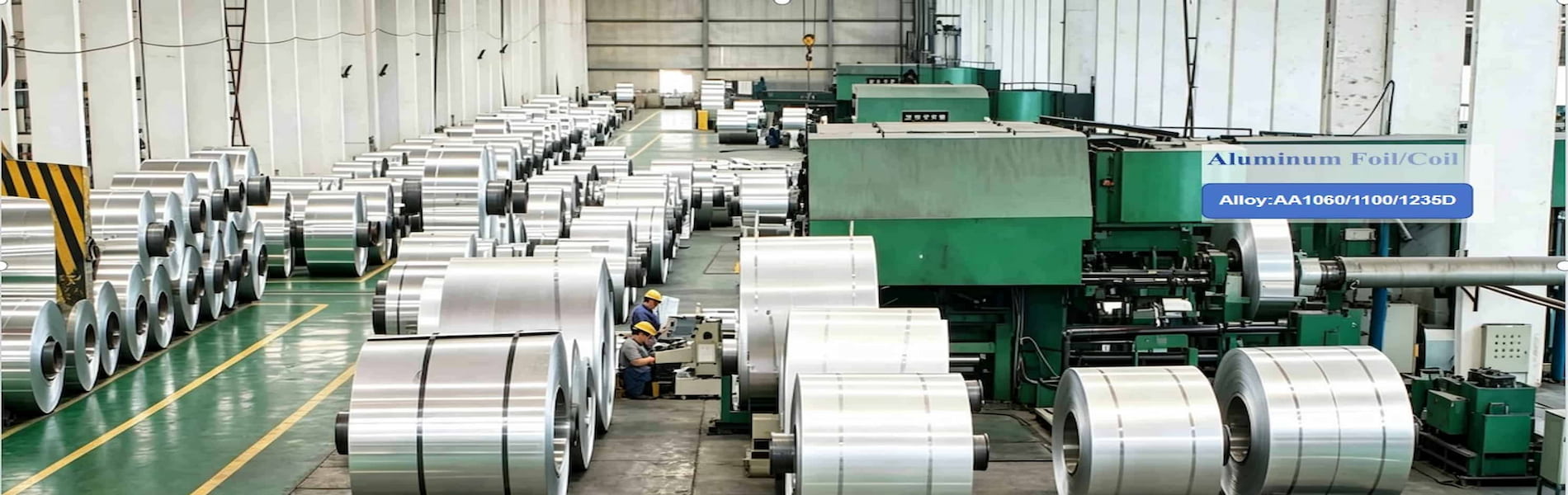
A reliable supplier of New Energy Battery Aluminum Materials product .
Anhui BIOPIN IOT Group
Applications of Aluminum Foil in lithium batteries
- The positive current collector of lithium-ion batteries. Aluminum foil current collectors exhibit superior electrochemical performance and morphological structural stability compared to copper foil under identical conditions. As a cathode current collector in lithium-ion batteries, aluminum foil effectively mitigates electrolyte-induced corrosion of the cathode and stabilizes battery polarization behavior
- The barrier layer for the soft-pack packaging materials of lithium-ion batteries. Aluminum foil exhibits exceptional water and oxygen barrier properties. Physically, it effectively prevents external water and oxygen from penetrating into the battery cell interior. Additionally, as a metallic material, aluminum foil possesses sufficient elongation and tensile strength to meet the requirements of cold stamping processes. It is highly suitable for serving as the barrier layer in soft-pack packaging materials, hence its widespread application.
- Other Applications of Aluminum Foil in Lithium-Ion Batteries. To reduce battery weight, some square lithium-ion batteries employ aluminum shells instead of stainless steel ones; the tab electrodes of lithium-ion batteries typically utilize 0.1 mm-thick aluminum foil, with the blank areas of carbon-coated aluminum foil commonly utilized for electrode fabrication or directly serving as welding points for tabs.
Quality Standards for Battery Aluminum Foil
|
Heterogeneous Substance
|
Lithium batteries must exhibit high safety performance during operation, requiring strict control of surface contaminants (e.g., aluminum powder) and impurities.
|
|
Wettability
|
Surface wetting tension is one of the most critical technical parameters for battery aluminum foil, significantly influencing the adhesion quality and durability of the coating.
|
|
Shape of Strip
|
Flatness of aluminum foil products.
|
|
Mechanical Property
|
The tensile strength of battery foil is inversely proportional to its thickness; as the thickness decreases, its tensile strength must be increased accordingly.
|
|
Thickness
|
The thickness must be uniform. Currently, most battery manufacturing companies in China require that the thickness deviation of aluminum foil is ≤2%.
|
|
Edge Trimming Quality
|
The edge shall be free from defects such as burrs or wavy edges.
|
|
Surface Quality
|
Defects such as pits or wrinkles are not allowed.
|
Development Direction of Battery Foil (Modification Treatment of Aluminum Foil)
- Carbon-coated aluminum foil. Surface carbon coating is one of the primary modification methods for aluminum foil. Carbon-coated aluminum foil is fabricated by compounding nanometer-scale conductive graphite with aluminum foil and falls into two categories based on solvent type: aqueous (using pure water as the dispersing medium) and oil-based (e.g., NMP). This material forms a double-sided conductive carbon layer (approximately 2 µm thick) on the aluminum foil surface via coating processes such as roll-to-roll deposition. By increasing the surface roughness of the current collector, reducing contact resistance between positive/negative electrode materials and the current collector, enhancing adhesion of active materials while minimizing binder usage, it prevents aluminum foil oxidation-corrosion, reduces battery polarization, and improves cell pack consistency.
- New Composite Aluminum Foil. The substitution of traditional metal current collectors with lighter materials represents a key research direction for enhancing battery energy density. This approach is based on the fact that energy density improvement is closely related to material weight; while aluminum and copper foils, as current collector materials, have high densities but contribute no capacity during charging and discharging. Polymer-based composite metal current collectors offer significant advantages in improving both the safety of lithium-ion batteries and their energy density. Current composite aluminum foils are typically fabricated via evaporation processes using aluminum-coated composite films with polyethylene terephthalate (PET) or similar substrates.