Principles for Selecting Anode and Cathode Materials for Lithium-Ion Battery Current Collectors
Nov 09, 2026
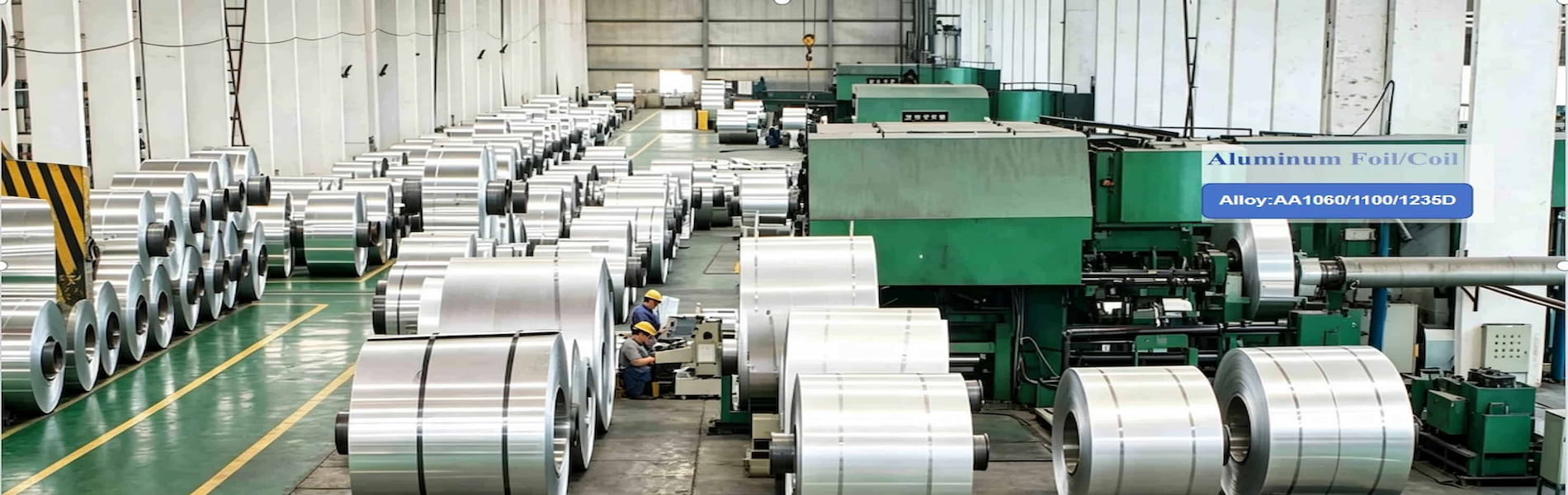
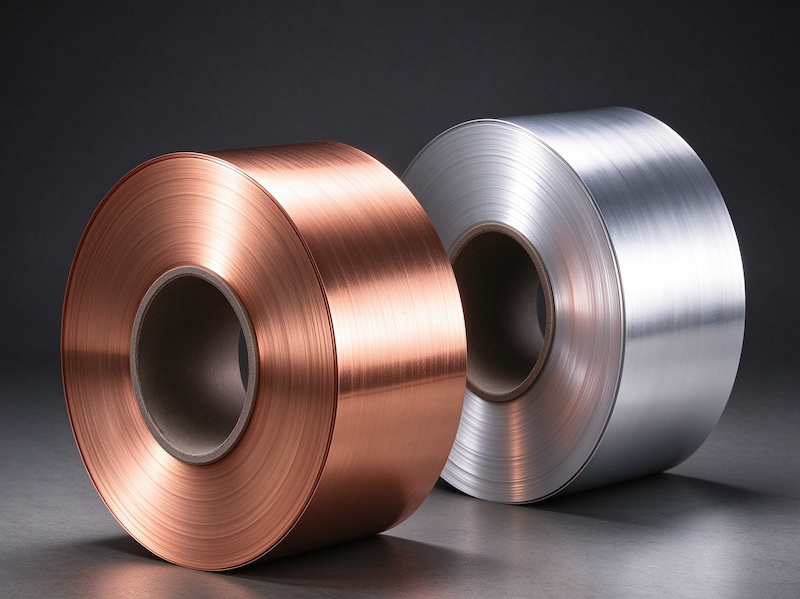
In lithium-ion battery architecture, current collectors are among the most critical fundamental materials. The standard use of aluminum foil for the positive electrode and copper foil for the negative electrode is not an arbitrary industry convention; rather, it is determined by a combination of electrode potential, electrochemical stability, mechanical properties, and interfacial compatibility. The following section explains the rationale for selecting current collector materials for the positive and negative electrodes based on fundamental principles.
I. Difference in electrochemical potential
The core underlying logic for selection. A current collector must first satisfy a hard requirement: within the operating potential range of the corresponding electrode sheet, it must not undergo electrochemical corrosion or react adversely with lithium; therefore, the difference in electrode potential is the primary criterion for material selection. The positive electrode operates at a high potential; under such high-potential conditions, aluminum foil spontaneously forms a dense aluminum oxide passivation film on its surface. Many people may wonder: since aluminum oxide is inherently an insulator, how can it conduct electricity? This oxide film is only nanometers thick, allowing electrons to penetrate the film via the quantum tunneling effect to enable conduction; meanwhile, this dense passivation film acts as a protective barrier that effectively prevents the aluminum substrate from undergoing continuous oxidative corrosion under high-voltage conditions, thereby ensuring long-term cycle stability. Conversely, the negative electrode operates at a low potential, which is an "off-limits zone" for aluminum: aluminum undergoes an alloying reaction with intercalated lithium ions, forming a lithium-aluminum alloy. This alloying process is accompanied by significant volume expansion; after repeated lithium intercalation and deintercalation, the aluminum foil becomes pulverized and fragmented, directly leading to cell failure. Copper foil avoids this issue because, at the low potential of the negative electrode, it does not undergo an alloying reaction with lithium ions. Although an oxide layer also forms on copper surfaces, its structure is loose; as long as the degree of surface oxidation is strictly controlled during production, a sharp increase in interfacial impedance will not occur, thereby ensuring the stable operation of the negative electrode. In summary: for high-voltage cathodes, aluminum relies on its passive film for oxidation resistance; for low-voltage anodes, copper does not alloy with lithium, thereby mitigating the risk of pulverization.
II. Process–Performance Compatibility
This determines the suitability for mass production. Electrochemical stability serves as the foundation, while conductivity, mechanical properties, interfacial affinity, and thermal stability determine whether a material can be compatible with mass-production processes such as coating, rolling, and cycling.
1. Conductivity and Mechanical Properties
Copper foil offers better ductility and can be rolled to specifications as thin as 6 μm or even thinner. Thin copper foil reduces the self-weight of the negative electrode and increases the overall energy density of the cell, making it a preferred choice for high-energy-density batteries; aluminum foil has higher tensile strength and rigidity, which typically allows for a higher paste loading during cathode coating. Aluminum foil can withstand the external forces associated with thick coating, high-speed coating, and rolling without easily undergoing tensile deformation or strip breakage, making it well-suited for cathode coating processes.
2. Interfacial Compatibility
The interfacial bonding strength between the material and the active material directly affects the battery's rate performance and cycle life. Aluminum foil exhibits excellent interfacial bonding with mainstream cathode materials (lithium iron phosphate LFP, NCM, lithium cobalt oxide LCO, etc.); after coating and drying and rolling, the cathode active material can adhere firmly to the aluminum foil surface, reducing the likelihood of powdering or delamination; copper foil has better compatibility with graphite and silicon-carbon type anode materials and exhibits lower interfacial contact impedance, which facilitates rapid lithium-ion intercalation/deintercalation and enhances the battery's rate discharge capability.
3. Chemical Performance
Copper exhibits higher thermal stability and a higher thermal conductivity; during high-current charge and discharge cycles, heat is concentrated at the negative electrode, and copper foil can rapidly dissipate this heat, thereby assisting in the negative electrode's heat removal. The advantage of aluminum foil lies in its resistance to high-voltage oxidation; under high positive electrode potentials and strongly oxidizing environments, its stability is far superior to that of copper, whereas copper rapidly dissolves and corrodes under high positive voltage and is therefore completely unsuitable for use as a positive electrode current collector.
III. How can the advantages of aluminum foil be further amplified using our carbon-coated aluminum foil?
Conventional optical aluminum foil already meets basic requirements; however, carbon-coated aluminum foil involves depositing a conductive carbon coating onto the surface of the aluminum substrate. The carbon layer can break through the high resistance of the alumina passivation film, further reducing the interfacial impedance of the positive electrode; it also enhances the adhesion between the active material and the current collector. Its advantages are particularly pronounced in thick electrodes, high-rate cells, and long-cycle energy-storage cells, making it an important solution for positive electrode current collectors in semi-solid-state batteries. Of course, it should also be noted that for all-solid-state sulfide systems, conventional lithium-ion battery carbon-coated aluminum foil is not suitable; instead, a custom coating with low residue and resistance to electrolyte corrosion is required.
Read More